
Realtors' body CREDAI on Monday said the cost of construction has gone up by 20-25 per cent, mainly during the last 45 days, due to steep rise in prices of raw materials like steel, and builders will be forced to increase property prices from next month by an average 10-15 per cent. CREDAI-MCHI, the Maharashtra chapter of CREDAI, demanded that the central as well as state governments consider giving relief to the industry by reducing stamp duty and GST rates, besides allowing input tax credit (ITC) to developers. The association said it would not advise member developers to stop construction works as of now, but if the price rise continues then builders would have no option but to halt works at project sites and defer purchase of raw materials.

Oil companies choose to skip the revision this time.

Wholesale inflation rate declined marginally to 0.2 per cent in February compared to 0.27 per cent in the preceding month despite a slight uptick in the food basket. The Wholesale Price Index (WPI)-based inflation was in the negative zone from April to October and had turned positive in November at 0.26 per cent. The inflation in February 2023 was 3.85 per cent.
Indian growth in the rest of this fiscal year and next will be propelled by robust domestic consumption as consumer confidence improves, and by investment, including large increases in government capital expenditure, according to the Asian Development Outlook September 2023. "As slowing exports could foment headwinds for the economy, and erratic rainfall patterns are likely to undermine agricultural output, the growth forecast for FY2023 is revised down marginally to 6.3 per cent," ADB said.
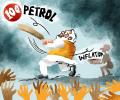
An average Indian spends no more than Rs 1.3 lakh per year, according to official statistics. This is close to what an average Indian earns annually. At this level of per capita income today, one litre of petrol costs one-third of an average Indian's daily income (Delhi prices), making it highly unaffordable. People in most other Asian and emerging countries find it more affordable.

CNG and piped cooking gas prices in cities such as Delhi and Mumbai may be hiked by 10-11 per cent next month as the government-dictated gas price is set to rise by about 76 per cent, ICICI Securities said in a report. The government, using rates prevalent in gas-surplus nations, fixes the price of natural gas produced by firms such as state-owned Oil and Natural Gas Corp (ONGC) from fields given to them on nomination basis, every six months. The next review is due on October 1.

The Freedom 125 has sold 8,310 units in October to date. This is its highest since it was launched in July and may touch close to 9,000 by the end of the month.

With the losses incurred by oil marketing companies (OMC's) on selling regulated fuels below their market prices (under-recoveries) reaching alarming levels, an urgent corrective action, like hiking the price of diesel, has become imperative, says a Crisil study.
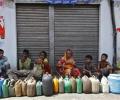
The staggered increase in kerosene rate may not have the same impact of freeing up the fuel price as for diesel.

Soaring fuel prices give birth to a jugaad system in Bihar's border towns abutting Nepal with residents smuggling in India-supplied cheaper petrol and diesel from the mountain kingdom.

Two-wheeler exports from India have decreased by 20 per cent year-on-year (Y-o-Y) to 1.69 million units in the first half (H1) of 2023-24 (FY24) due to a challenging geopolitical situation and foreign exchange (forex) crises in key markets such as South Asia, industry body Society of Indian Automobile Manufacturers (Siam) said on Monday. On the other hand, passenger vehicle (PV) exports in H1FY24 increased by 5 per cent to 336,754 units because the key markets are much more diversified worldwide, Vinod Aggarwal, president, Siam, told reporters during a press conference. The Russia-Ukraine war, which started in February 2022, has brought significant instability to global fuel prices.

Retail inflation softened to 6.71 per cent in July due to moderation in food prices but remained above the Reserve Bank's comfort level of 6 per cent for the seventh consecutive month. With retail inflation continuing to remain high despite a fall in prices of vegetables and edible oils, among other commodities in July, the Reserve Bank of India (RBI) might go for another rate hike in September. The Consumer Price Index (CPI) based retail inflation was at 7.01 per cent in June and 5.59 per cent in July 2021. It was above 7 per cent from April to June this fiscal.
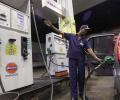
Petrol and diesel prices were on Wednesday hiked by 24-25 paise per litre, the steepest increase since July 5 Union Budget, as a fallout of turmoil in global oil markets following drone attacks on Saudi Arabian crude oil facilities.

India's fuel demand in May slumped to its lowest in nine months as restrictions to curb the second wave of COVID infections stalled mobility and muted economic activity. Fuel demand fell 1.5 per cent to 15.1 million tonnes despite the low base of May 2020 and was down 11.3 per cent when compared to the previous month, according to data from the Petroleum Planning and Analysis Cell (PPAC) of the oil ministry. India was under one of the world's strictest lockdowns in May last year, which brought all mobility and economic activity to a grinding halt.

Swift Dzire has clocked 2.5 million in sales, and you might, in a non-too-distant future, see headlines that the DZire has done 3 million as well, observes Suveen Sinha.
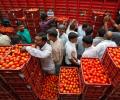
The wholesale food index rose 2.88 per cent year-on-year.

Passenger and commercial vehicle prices are expected to rise as automobile companies invest in upgrading vehicles to meet stricter emission norms that kick in from April next year. The Indian automobile industry is currently working to make their products meet the second phase of Bharat Stage VI, equivalent to Euro-VI emission norms, in real time driving conditions. Four-wheeler passenger and commercial vehicles will need more sophisticated equipment to be added to meet the next level of emission standards.

Maruti Suzuki India (MSIL) will hold discussions with the Centre and state governments on how the production of compressed biogas (CBG), which can be used in vehicles that run on compressed natural gas (CNG), can be expanded in the country, its majority shareholder Suzuki Motor Corporation (SMC) said. The demand for CNG vehicles has been rising significantly in the country. MSIL sold 145,000 CNG vehicles in the first quarter of 2024-25, marking a 28.3 per cent year-on-year (Y-o-Y) growth.
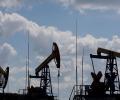
India's crude oil imports from Russia fell for a second straight month in January to its lowest in 12 months but the nation's insatiable appetite for Russian crude remains for the long term, according to data from energy cargo tracker and industry officials. Russia supplied 1.2 million barrels per day of crude oil to India in January, down from 1.32 million barrels in December and 1.62 million barrels in November 2023, according to data from energy cargo tracker Vortexa. Russia however continues to remain India's top oil supplier, accounting for a little less than a quarter of 4.91 million barrels a day of oil that the world's third largest energy consumer imported in January.
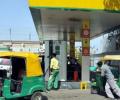
Prices of natural gas, which is used to generate electricity, make fertiliser and is converted into CNG to run automobiles, is likely to rise to record levels at the rate review scheduled this week, sources said. The government-dictated price for natural gas produced in the country is to be revised on October 1. After factoring in the spike in energy prices witnessed in recent months, the rate paid for gas produced from old fields such as of state-owned Oil and Natural Gas Corporation (ONGC) is likely to rise to $9 per million British thermal units from current $6.1.

IOC, BPCL and HPCL on Thursday afternoon stopped ATF supplies to Air India at six airports - Kochi, Pune, Patna, Ranchi, Vizag and Mohali - over payment defaults. AI flights from these places were tanking up from other airports.

The slowdown in corporate revenue growth over the last one year has begun to reflect in India Inc's capital expenditure, or capex. The country's top listed companies are going slow on fresh investment in capacity expansion, in line with a deceleration in their top line growth. The combined fixed assets of the listed companies, excluding banking, finance services and insurance (BFSI) and the government-owned oil & gas firms, were up 10.1 per cent year-on-year (Y-o-Y) during April-September 2023 (H1FY24) - the slowest in 18 months - as against 21.1 per cent Y-o-Y growth in H2FY23 (October 2022-March 2023) and 11.6 per cent growth in the April-September 2022 period (H1FY23).

Consumer-focused companies have been left with few options but to increase the prices of their products as input costs mount because of various factors, including supply chain disruptions. This has been affecting monthly household budgets. Prices of scores of items -- from spices to soaps to rice -- have increased in the past year.

'The funds were arranged from multiple banks at a very competitive rate and converted into dollars at the best rates.'
CNG price in the national capital and adjoining cities on Tuesday was hiked by Rs 0.50 per kg, while an imminent increase in petrol and diesel price has been put on wait-and-watch mode for more clarity on global oil prices. CNG price in NCT of Delhi has been increased to Rs 57.51 per kg from Rs 56.51, according to the information posted on the website of Indraprastha Gas Ltd - the firm which retails CNG and piped cooking gas in the national capital. Following the firming up of international gas rates, IGL has been raising CNG rates by up to 50 paise (Rs 0.50) per kg periodically. Prices have gone up by about Rs 4 per kg this year alone.

Diesel price on Monday was hiked by 25 paise per litre -- the third increase since last week -- and more rate hikes for both diesel and petrol are in the offing in the coming days as international oil prices have soared to a three-year high. The price of diesel was hiked to Rs 89.32 per litre in Delhi and to Rs 96.94 in Mumbai, according to a price notification of state-owned fuel retailers. This is the second straight day of increase in diesel prices and the third since September 24 when the state-owned oil firms ended a three-week hiatus in rates.

'The actual price of petrol is Rs 35 and it jumps to Rs 88 because of government taxes.'

Petrol price was hiked by 30 paise per litre and diesel by 35 paise a litre, according to a price notification of state-owned fuel retailers. The seventh straight day of price hike pushed fuel rates to a new record high. The price of petrol in Delhi rose to its highest-ever level of Rs 104.44 a litre and Rs 110.41 per litre in Mumbai, the notification showed. In Mumbai, diesel now comes for Rs 101.03 a litre; while in Delhi, it costs Rs 93.17.
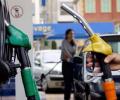
As the world's third-largest oil importer and consumer, India is running out of options as the relentless surge in international oil prices make it imperative to pass them on to consumers, officials said on Monday. India imports 85 per cent of its crude oil needs and about half of its natural gas requirement. While the imported crude oil is turned into fuels such as petrol and diesel, gas is used as CNG in automobiles and fuel in factories.

General Motors India on Thursday posted 4.32 per cent decline in sales at 8,901 units in February. The company had sold 9,303 units in the same month of 2010, General Motors India said in a statement.

State-owned fuel retailers, who control 95 per cent of the petrol pump sales, sell diesel at government-fixed rates, which are way lower than the cost of production.

Trumponomics, poor growth, and high valuation certainly don't make a bullish recipe for Indian markets, warns Debashis Basu.
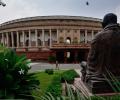
The stormy second part of Budget Session continues. Both houses of Parliament have been facing continuous protests by opposition parties over issues like fuel price hike.

They were shut when PSUs were selling heavily subsidised fuel; will reopen now, buoyed by diesel decontrol
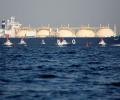
Oil and LNG prices are likely to shoot up if Iran is to block Strait of Hormuz, through which countries like India import crude oil from Saudi Arabia, Iraq and UAE, leading to a spike in inflation, analysts said on the Iran-Israel conflict. The Iran and Israel conflict has escalated over the last few days. Iran first launched drone and rocket attacks on Israel, which retaliated by firing a missile. Crude oil prices have hovered around USD 90 per barrel since the conflict.

The faster-than-expected rise in interest rates by the US Federal Reserve (US Fed) shook global financial markets in early 2022. And now the ongoing war between Russia and Ukraine has lifted commodity prices, with Brent crude oil hitting a 14-year high of $139 a barrel in intraday trade. All these developments have sent the equity markets across the world into a tailspin.
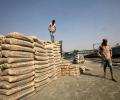
The sector may be overcrowded with a fair number of large players and the entry of the Adani Group through its two key acquisitions, followed by the takeover of majority stake in Sanghi Industries via Ambuja Cements. Since every major player is in expansion mode, there could be a capacity surplus and hence, price wars.
Petrol and diesel prices were hiked by 80 paise a litre each on Wednesday, taking the total increase in rates in 16 days to Rs 10 per litre.

Lessor market sources said with the fuel prices remaining high, IndiGo would get better rates for the fuel-efficient A320neos.
Though June-quarter performance was impressive, fuel price hikes and falling demand pose fresh challenges for the company.
